


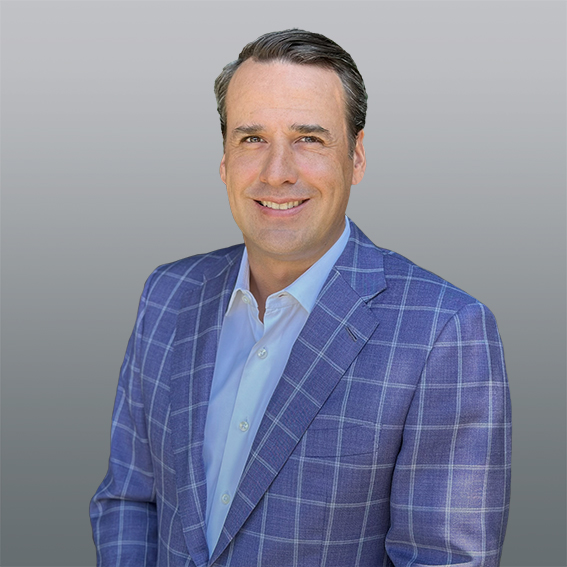
Harry Shillingford
Co-Head of Americas Prime Brokerage Sales, Outsourced Trading and Capital Introduction

Andrew Rae-Moore
Co-Head of International Prime Brokerage and Outsourced Trading

Ortwin Gierhake
Head of Asia Prime Services Sales


The recent Prime Brokerage Survey by Global Custodian reflects a market that remains active, but where operating conditions have become tougher.
Fund launches continue, and family offices are increasingly engaging with prime brokers for the first time as their investment activity becomes more sophisticated. At the same time, capital constraints and higher service expectations are influencing how managers assess their prime broker relationships, and how selective providers are in return.
Jack Seibald, global co-head of prime services at Marex, notes in the report: “Funds as they grow are adding additional primes. The notion of diversification of counterparty risk is still a consistent theme that really hasn’t changed much.”
Diversification is a useful starting point, but for managers it is rarely the end goal. The real challenge is how to add flexibility without creating unnecessary strain on the operating model, and how to ensure each prime broker relationship genuinely earns its place.
Across New York, London and Hong Kong, three of Marex’s prime brokerage leaders – Harry Shillingford, Andrew Rae-Moore and Ortwin Gierhake – share their perspective on how these dynamics are playing out, and what hedge fund and family office leaders are prioritising as they look ahead to 2026.
Diversification is normal, but expectations have changed
Multi-prime is no longer a later stage decision reserved for large, established funds. Managers are adding providers earlier, often as a matter of operating discipline.
“Diversification today isn’t just about counterparty exposure,” says Harry. “Managers want flexibility. They want to know they can access balance sheet, financing, execution and support without being overly dependent on a single provider.”
What has changed is how those additional relationships are evaluated.
“Managers are much clearer about what they expect from each prime broker relationship,” adds Andrew. “It’s not about having more providers for the sake of it. It’s about whether each one genuinely adds value to how the business operates.”
That scrutiny is reinforced by structural pressures on the largest banks. Return on equity, capital efficiency and resource constraints continue to shape how bulge-bracket firms prioritise clients, with real implications for service levels and long-term alignment, particularly for managers below the largest AUM tiers.
As a result, many are taking a harder look at providers whose business models are designed to support managers through different stages of growth, and whose value extends beyond execution and financing alone.
Access to capital also forms part of that assessment.
“Capital introduction is about relevance and access,” says Harry. “Managers want to work with prime brokers who understand their strategy, their trajectory and the type of investors they’re trying to reach, and who can make meaningful connections when the timing is right.”
In a more selective market, that connectivity increasingly sits alongside execution, financing and service quality when managers assess the overall value of a prime broker relationship.
“This has created a growing space for mid-tier, institutionally backed prime brokers that combine global capability with a more engaged service model, and that are willing to build relationships over time rather than only at scale,” adds Ortwin.
Simplification: the other side of the coin
If diversification is one side of the story, simplification is the other.
Managers may be adding providers, but they are also acutely aware of how quickly operational complexity can spiral as strategies, venues, financing and relationships multiply.
“Managers want optionality, but they don’t want unnecessary moving parts,” says Ortwin. “As funds scale, the role of a prime broker is to make the business easier to run, not harder”
For managers, the test is straightforward: whether each prime broker relationship supports a simpler operating model as the business grows.
Family offices: entering prime brokerage for the first time
A separate but increasingly important theme highlighted in the Global Custodian coverage is the growing role of family offices.
Many are engaging with prime brokers for the first time as their investment strategies become more active, more global and more operationally demanding.
Jack addresses this directly in the report, also noting that former hedge fund managers are increasingly operating from family office structures and bringing institutional expectations with them. “What do they want?” he asks. “They want exactly what they had when they were managing the funds.”
“Family offices today are often running strategies that look very similar to hedge funds,” says Harry. “That means access to global markets, reliable clearing and settlement, financing where appropriate, and a service model that understands active trading strategies.”
A global market, with regional nuance
Across regions, the core themes are consistent, even if the emphasis varies.
In Asia and the Middle East, managers and family offices are increasingly global in outlook from day one. They expect to trade across regions and time zones, access international allocators and operate with the same standards as peers in the US or Europe.
“Clients want to know that wherever they trade, the experience is consistent,” says Ortwin. “They don’t want different rules or different service standards depending on geography.”
At the same time, local market knowledge still matters.
“Global reach is table stakes,” adds Harry. “What differentiates providers is how consistently that capability is delivered, day to day.”
Beyond clearing and financing
For many managers, prime brokerage plays a broader role in how trading, financing and risk management come together.
That includes coordination across execution, financing, capital introduction and, in some cases, outsourced trading. The value lies not just in the range of services available, but in how effectively they fit within a manager’s existing setup.
“Prime brokerage should reflect the manager’s style and portfolio needs, not force them into a single model,” says Andrew.
For managers reviewing their arrangements, the key question is whether a prime broker’s offering aligns with how the business actually trades and operates. In that context, flexibility is what underpins long-term value.
What the survey results reinforce
Against this backdrop, the Global Custodian survey reinforces what hedge fund and family office leaders consistently value from their prime brokers: dependable service, operational strength, execution capability and a model that scales with them.
Marex Prime Services recorded an overall score of 5.88 (on a scale to 7.0) above the global average, with 12 of 14 categories scoring ahead of benchmark. The strongest results came in areas that directly affect day-to-day experience, including client service, operations, trading and execution, asset safety and consulting.
Client service, in particular, stood out, with respondents highlighting responsiveness and hands-on support; attributes that matter most when expectations are high.
The survey also reflects the prime brokerage business’ first full year within Marex following its transition from TD Cowen, with no adverse impact on client experience and continued expansion across regions and services.
Looking ahead
The prime brokerage market in 2025 was defined by adjustment. Managers continue to grow selectively, but with a sharper focus on resilience, alignment and service quality.
Diversification will continue. Family offices will become more active. Capital constraints will shape how banks allocate resources. And prime brokers whose models are built around consistency, engagement and long-term alignment will be best placed to support managers through the next phase of growth.
As Andrew summarises: “Managers want partners who understand their business, stay close to it and help it run more smoothly as it grows.”
For hedge fund and family office leaders looking ahead to 2026, that remains the most relevant test of a prime broker relationship.